

From research question to preclinical evidence.
Elpida BioPharm is a scientist-led CRO and biotechnology developer in Thessaloniki, Greece. We work across therapeutic areas and product types, from study design and prototyping to preclinical evaluation.
Our research strengths include drug delivery and nanomedicine, drug-releasing biomaterials and microbiome science. Our own programmes include nanomedicine, immunotherapy, bacterial therapeutics and metabolic health.

Contract research and co-development for biotech, pharma, medtech and academic teams
From fundamental science
to clinical practice
We founded Elpida BioPharm to connect fundamental research with questions that matter in the clinic. We start with the unmet clinical need and ask what a biological discovery could change for patients.
That question guides the choice of experimental models, study endpoints and evidence needed to advance a candidate. We apply this approach in our own programmes and in contract research with biotech, medtech and academic teams.
Fundamental research
Identify a biological mechanism relevant to a clinical need.
Candidate development
Turn the discovery into a testable candidate or prototype.
Preclinical evaluation
Assess activity and tolerability in relevant experimental models.
Preparation for clinical studies
Define the next steps and the evidence needed to support clinical evaluation.
Research for your next development decision
Bring us a concept, a shortlist of formulations or an existing candidate. We define what the project needs to establish and agree the study design and deliverables with you.

Formulation & prototyping
Develop a research prototype or compare candidate formulations for a drug delivery system, biomaterial or drug-eluting device.
Deliverable · Prototype or ranked candidate shortlist

In vitro feasibility
Define cell-based and material characterisation studies to compare performance and decide which candidate should progress.
Deliverable · Comparative data and next-study criteria

Exploratory in vivo studies
Design and coordinate preclinical studies of biodistribution, early activity or tolerability with suitable facilities agreed for the project.
Deliverable · Study data and an integrated interpretation
Example research projects
Start with a candidate and a decision you need to make. We design the study around the evidence your team needs to move forward.
Pharmacokinetics & biodistribution
Does your formulation reach the target tissue?
For a team with two shortlisted formulations, we design a comparison of blood exposure, tissue distribution and persistence over time.
Choose a lead formulation for efficacy studies.
Pharmacology & proof of concept
Does the candidate show a meaningful effect?
For a team with promising in vitro results, we select a relevant disease model, define endpoints and assess whether the effect translates in that model.
Decide whether to advance the candidate or refine it.
Exploratory safety & tolerability
What do you need before formal safety studies?
For a team with early efficacy data, we review the existing safety evidence, plan an exploratory tolerability study and map the remaining gaps.
Agree what evidence to gather before formal safety assessment.
How a project runs
Our founding scientists help shape the scope, review the results and decide with you what the evidence supports.
Define the question
Review the candidate, existing data and the decision the next study must support.
Design the study
Agree the model, readouts, timing and criteria for moving forward.
Run the agreed work
Carry out or coordinate the study and review progress with you at agreed milestones.
Interpret the results
Deliver the agreed data and report, explain the limitations and propose the next steps.
Study facilities, required approvals and applicable GLP status are agreed for each project.
Our pipeline
Alongside contract research, we develop our own candidates in oncology and metabolic health and seek partners for preclinical evaluation and co-development.

Live biotherapeutics for prostate cancer
MYCOCAN aims to develop an oral live biotherapeutic based on a genetically engineered bacterium for the treatment of hormone-dependent prostate cancer. The programme studies how androgen biology and tumour immunity could inform a combined therapeutic approach.
Early research and development

A synbiotic for weight management
We are evaluating a candidate that combines selected probiotic bacteria with prebiotic dietary fibres. Our published framework describes what can help or hinder a probiotic strain in the gut.
Candidate selected for further evaluation
Selected research by our team
Eight publications from our founders’ academic and collaborative work in drug delivery, preclinical evaluation and microbiome science.

mRNA nanomedicine in oncology
Alexey Yaremenko co-authored a preclinical study on how IL‑10 mRNA nanoparticles affected antitumour immunity.
Read the study
Nanoparticle delivery for lung metastases
Alexey Yaremenko co-led a preclinical study using red blood cells to carry drug-loaded nanoparticles to the lungs in a melanoma metastasis model.
Read the study
A drug-eluting contact lens for glaucoma
Alexey Yaremenko and Nadezhda Pechnikova contributed equally to the development and preclinical evaluation of a contact lens prototype for ocular drug delivery.
Read the study
Early nanoparticle pharmacokinetics
Alexey Yaremenko co-led a systematic study of nine factors affecting how quickly nanoparticles initially clear from the blood.
Read the study
Long-term nanoparticle fate in vivo
Alexey Yaremenko co-led a year-long study tracking the distribution, persistence and breakdown of magnetic nanoparticles in mice.
Read the study
Metal–organic frameworks for gene and drug delivery
Alexey Yaremenko co-led research on metal–organic frameworks for the simultaneous delivery of a functional gene and a small molecule in vitro and in vivo.
Read the study
A mathematical model of probiotic behaviour
Nadezhda Pechnikova and Alexey Yaremenko co-authored a framework that uses the Niche Tension Index to describe factors that help or hinder probiotic establishment in the gut.
Read the article
Nicotinamide riboside in ischaemia–reperfusion
Nadezhda Pechnikova co-authored a study of intestinal microcirculation, vascular function and tissue injury after mesenteric ischaemia–reperfusion in rats.
Read the studyFounding team
Alexey and Nadezhda bring together therapeutic design, preclinical study development and microbiome research.
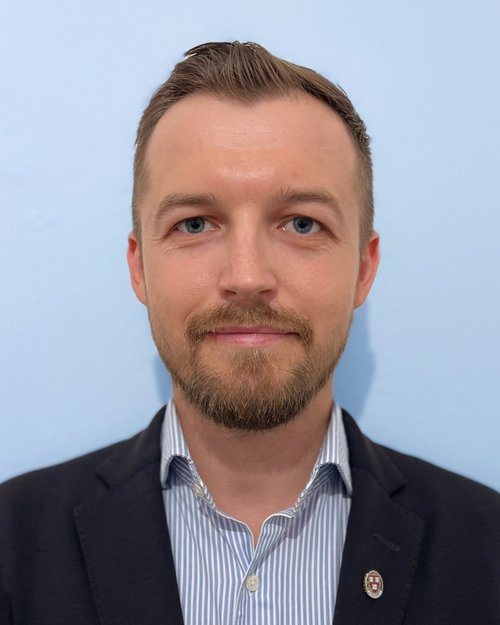
Alexey V. Yaremenko, PhD
CEO and Co-Founder
Alexey is a molecular biologist and the principal investigator of a research project on lung cancer immunotherapy at Aristotle University of Thessaloniki, funded by the Hellenic Foundation for Research and Innovation (H.F.R.I.). He was a Fulbright visiting researcher at Harvard Medical School and Brigham and Women’s Hospital, where he worked on nanomedicine and therapeutic delivery.
His research spans mRNA therapeutics, nanoparticle pharmacokinetics and drug-eluting biomaterials. At Elpida, he leads scientific strategy and works with partners to define what their next study should establish and what evidence would justify advancing a candidate.
Yaremenko Research GroupSelected study in Nature Nanotechnology

Nadezhda A. Pechnikova, MSc
CSO and Co-Founder
Nadezhda is a biomedical researcher and PhD candidate at Aristotle University of Thessaloniki. She holds FELASA certification in laboratory animal science. She helped establish a preclinical research facility at the Almazov National Medical Research Centre, including licensing and preparation for GLP assessment. She previously conducted preclinical research at the FMBA Institute of Toxicology.
Her work spans experimental pharmacology, biomaterials and host–microbe interactions. She studied intestinal microcirculation in ischaemia–reperfusion and led a Gut Microbes paper that proposed a mathematical framework for probiotic establishment. At Elpida, she helps shape preclinical studies and the microbiome research programmes.
Academic profileIschaemia–reperfusion studyModel in Gut Microbes
Tell us about your project
Share what you are developing, what data you already have and the decision you need to make. We can discuss project scope, deliverables and timing.
Request an initial discussion
Send a short, non-confidential brief for a CRO project or research collaboration.
Discuss a project